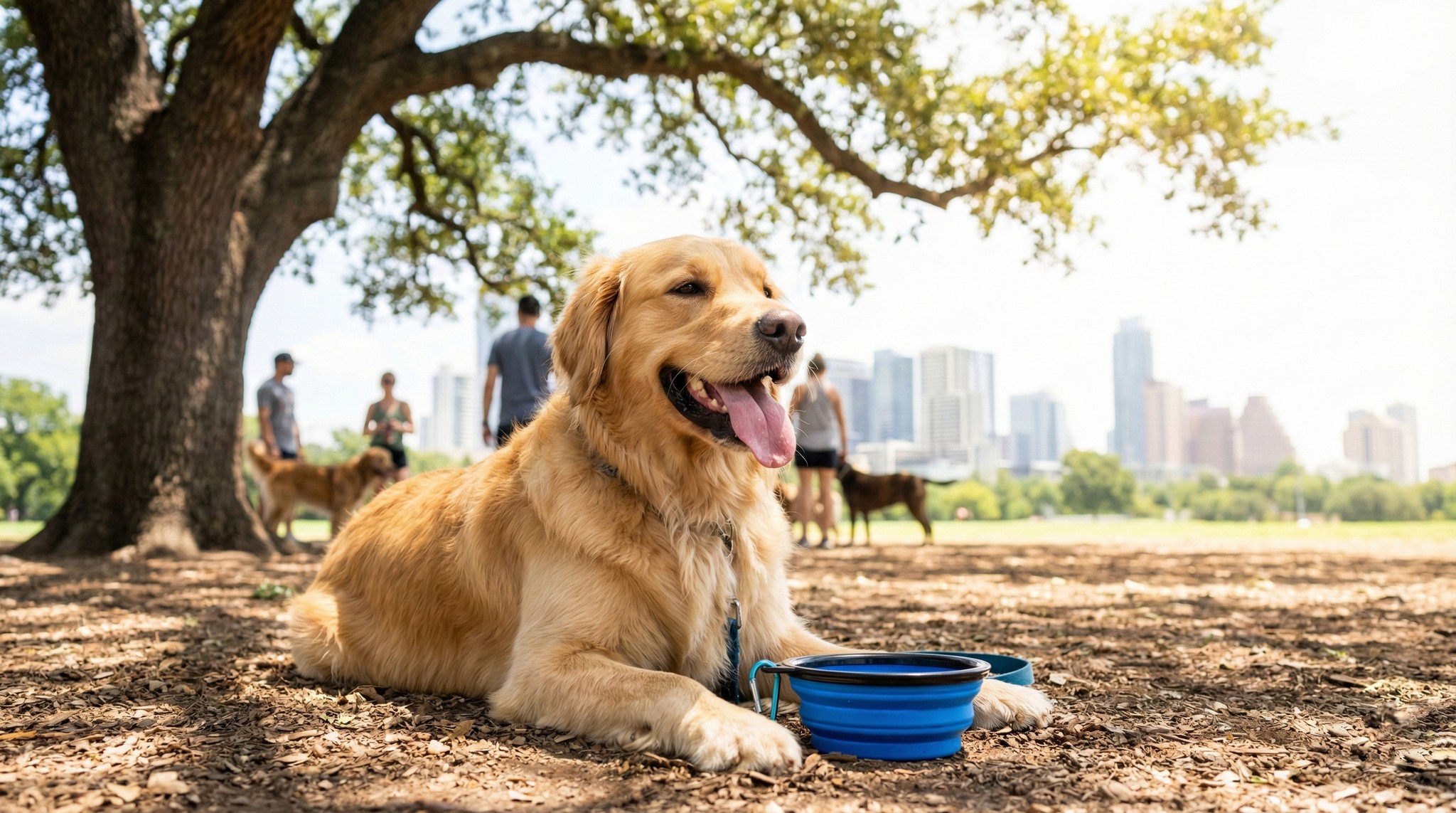
Austin summers are no joke. From June through September, triple-digit temperatures are common. The heat index often climbs even higher. For dog owners, this creates a real challenge.
Your dog cannot regulate body temperature the way you do. Dogs cool themselves primarily through panting and sweating through their paw pads. When temperatures soar, these natural cooling methods can fail.
This guide covers practical strategies to keep your dog cool in Austin summer heat. You will learn how to time outdoor activities, protect paws from hot pavement, recognize warning signs of overheating, and respond if your dog gets too hot.
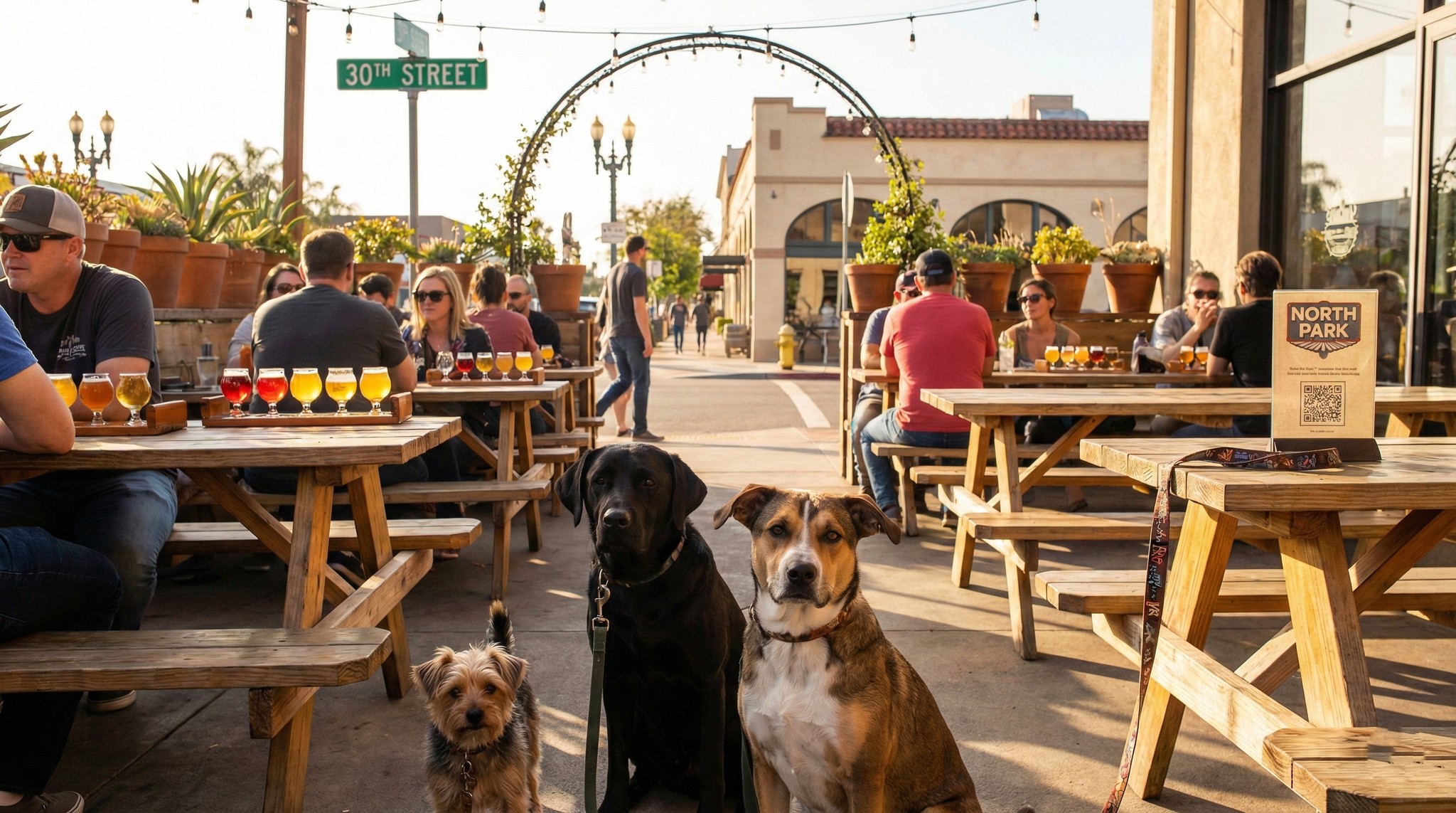
Dog friendly restaurants in Austin, TX
How Dogs Handle Heat Differently Than Humans
Understanding why dogs struggle in the heat helps you protect them. Humans have sweat glands across the entire body. Dogs do not.
Dogs rely almost entirely on panting to release excess body heat. They also sweat through their paw pads, but this provides minimal cooling. When humidity rises alongside temperature, panting becomes less effective.
A dog's normal body temperature ranges from 99 to 102.5 degrees Fahrenheit. Heatstroke occurs when body temperature exceeds approximately 104 degrees. At this point, the body cannot cool itself effectively. According to Michigan State University's College of Veterinary Medicine, this can lead to organ damage, seizures, and death if not treated immediately.
Some dogs face higher risks than others. Brachycephalic breeds like French Bulldogs, Pugs, and English Bulldogs have shorter airways. This limits airflow and makes panting less efficient. Dogs with thick double coats, older dogs, overweight dogs, and those with heart or lung conditions also struggle more in the heat.
Best Times to Walk Your Dog in Austin
Timing matters enormously during Austin summers. The hottest part of the day typically falls between 2 p.m. and 5 p.m. During this window, both air temperature and pavement temperature peak.
Early morning walks work best. Before 10 a.m., temperatures remain relatively moderate. The pavement has had overnight hours to cool down. Many Austin dog owners start their walks at sunrise during peak summer months.
Evening walks can work, but with caution. The City of Austin notes that pavement retains heat for hours after sunset. Even after the air cools, surfaces can remain dangerously hot. Test the ground before assuming it is safe.
On extremely hot days, consider skipping outdoor exercise entirely. Indoor play, puzzle toys, and mental stimulation can tire your dog without heat exposure.
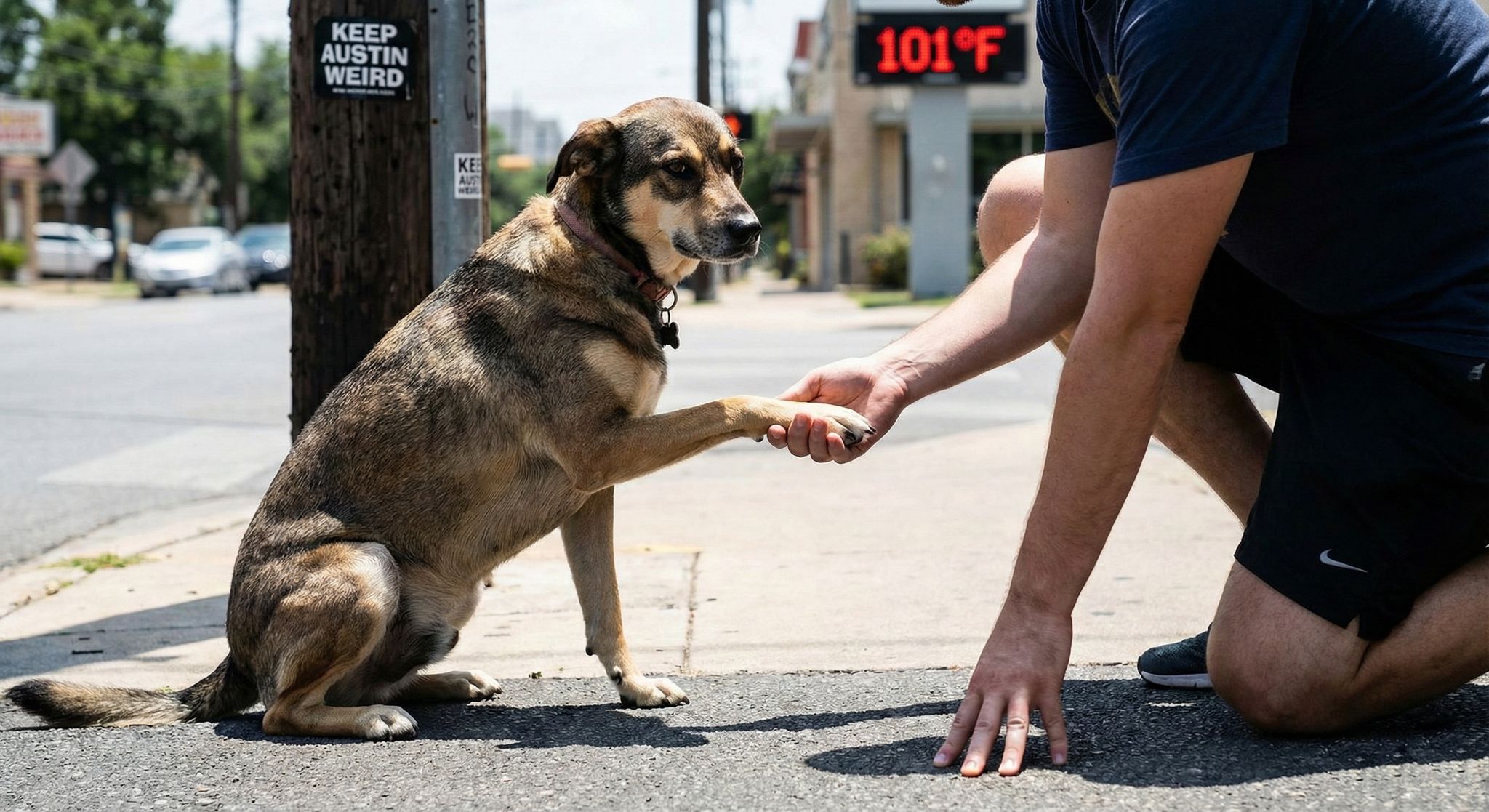
Protecting Your Dog's Paws from Hot Pavement
Hot pavement is one of the most overlooked dangers during Austin summers. Asphalt and concrete absorb heat throughout the day. Surface temperatures often exceed air temperature by 40 to 60 degrees.
The American Kennel Club reports that when air temperature reaches 86 degrees, asphalt can register 135 degrees. That is hot enough to cause burns within seconds.
Use the 10-second test before every walk. Place your bare hand or foot on the pavement. If you cannot hold it there comfortably for 10 seconds, it is too hot for your dog's paws.
Signs of paw pad burns include limping, refusing to walk, licking paws excessively, blisters, and darkened or damaged pads. If you notice these symptoms, move your dog to a cool surface immediately and flush the paws with cool water.
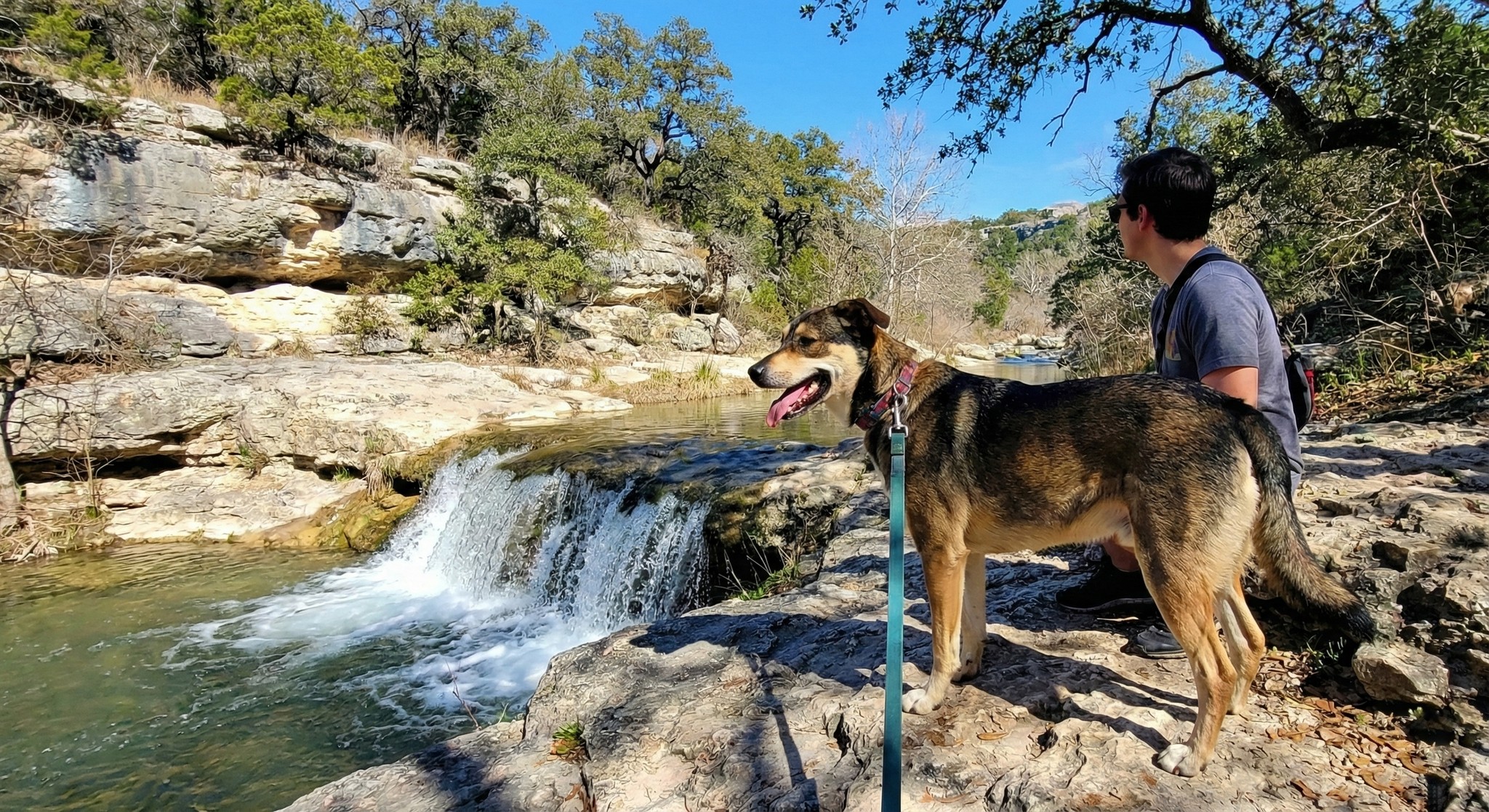
Prevention options include dog booties, paw wax, and sticking to grassy or shaded routes. Many Austin parks have shaded walking paths and grassy areas that stay cooler than exposed pavement.
Keeping Your Dog Cool in Austin Summer Heat: Hydration and Shade
Dehydration happens quickly in extreme heat. Dogs can lose significant amounts of water through panting. Fresh, cool water should be available at all times.
When heading outdoors, bring a portable water bottle and collapsible bowl. Offer water every 15 to 20 minutes during outdoor activities. Many Austin parks have pet water stations, but do not rely on them exclusively.
Shade provides essential relief from direct sunlight. The American Veterinary Medical Association (AVMA) recommends providing different temperature zones for your pet's comfort. At home, ensure your dog can move between cooler and warmer areas.
Indoor cooling options include tile or hardwood floors, cooling mats, and air conditioning. Fans alone do not cool dogs effectively because dogs respond to heat differently than humans.
Frozen treats offer another cooling method. Freeze dog-safe fruits, low-sodium broth, or plain water in ice cube trays. These provide hydration and entertainment while lowering body temperature.
Recognizing Signs of Heatstroke in Dogs
Knowing the warning signs of heatstroke can save your dog's life. Early detection allows for faster intervention.
Initial signs of overheating include excessive panting, drooling, and a tongue that hangs far out of the mouth. Your dog may lag behind during walks or seem reluctant to continue. The tongue and gums may appear bright red.
More serious symptoms indicate a medical emergency. These include vomiting, diarrhea, difficulty breathing, weakness, confusion, seizures, and collapse. The Cornell University College of Veterinary Medicine emphasizes that heatstroke is a life-threatening emergency requiring immediate veterinary care.
If you see these signs, follow the rule: cool first, transport second. Begin cooling your dog immediately before driving to the vet.
How to Cool Down an Overheated Dog
Acting quickly during a heat emergency makes a significant difference. Every minute counts when body temperature climbs to dangerous levels.
Move your dog to a shaded or air-conditioned area immediately. Apply cool water to the head, neck, chest, and paw pads. You can use a hose, wet towels, or ice packs wrapped in cloth. Do not use ice-cold water, as this can cause blood vessels to constrict and trap heat inside the body.
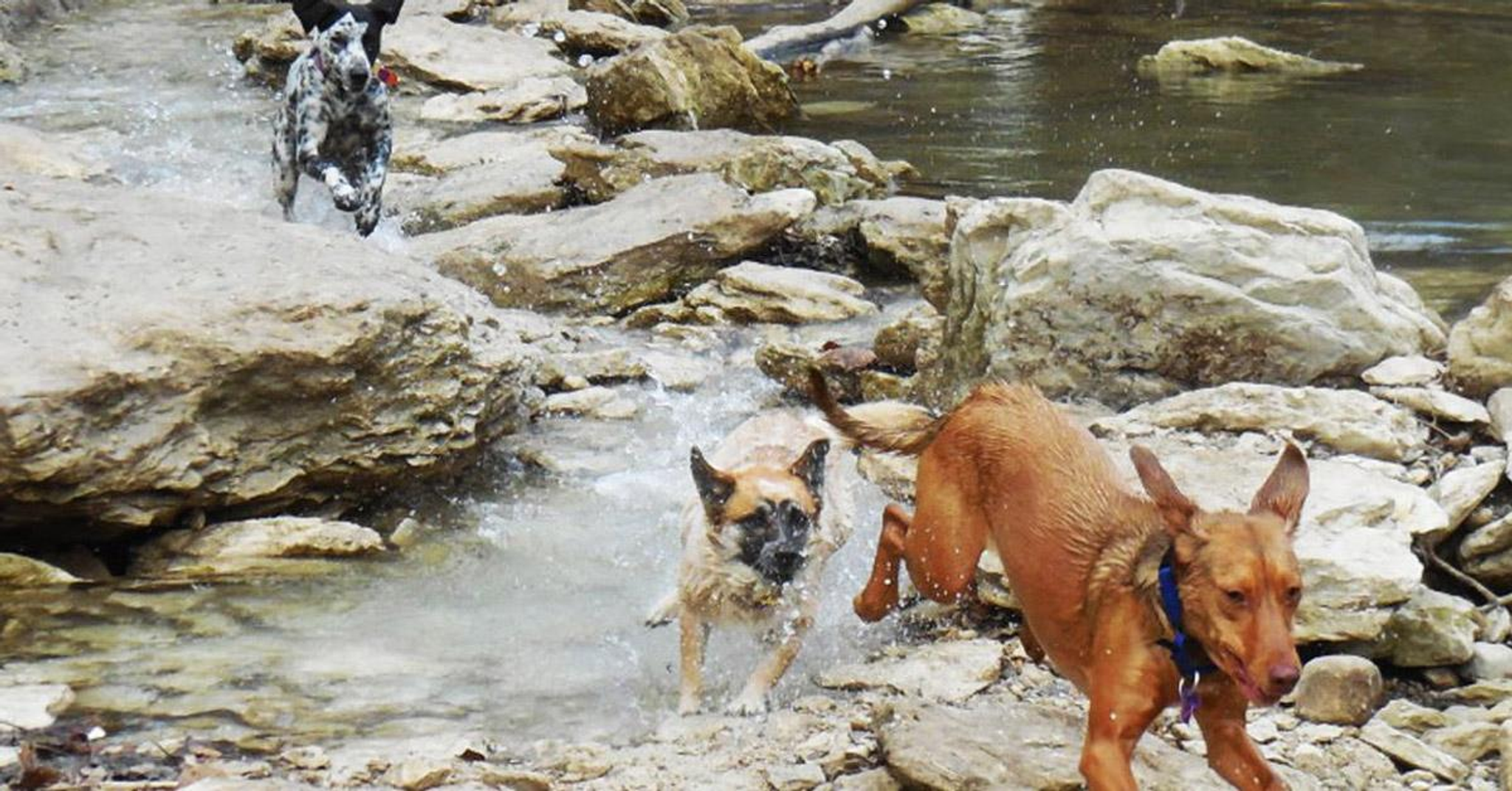
Recent research published in the Journal of the American Veterinary Medical Association found that encouraging dogs to dunk their heads in water is highly effective for rapid cooling. Blood flow increases to the head, nose, tongue, and ears during heat stress. Cooling these areas helps lower overall body temperature quickly.
Offer small amounts of cool water. Do not force your dog to drink large quantities at once. Contact your veterinarian or an emergency animal hospital even if your dog appears to recover. Internal damage may not be immediately visible.
Never Leave Your Dog in a Parked Car
This point cannot be overstated. A parked car becomes a death trap within minutes, even on mild days.
The AVMA reports that vehicle interior temperature can rise about 20 degrees in just 10 minutes. On an 85-degree day, the inside of a car can reach over 100 degrees within 10 minutes and 120 degrees within 30 minutes.
Cracking the windows does not help. Parking in shade does not help. There is no safe amount of time to leave a dog in a parked car during warm weather.
If you see a dog alone in a hot car in Austin, note the vehicle description and license plate. Alert nearby businesses to locate the owner. If the dog shows signs of distress, call Austin Animal Services or local law enforcement immediately.
Dog friendly restaurants in Austin, TX with covered patios
Enjoying Austin Summers Safely with Your Dog
Austin offers plenty of ways to enjoy summer with your dog while staying safe. Early morning hikes at shaded trails, visits to dog-friendly patios during cooler hours, and swimming at designated dog parks all work well with proper precautions.
Plan activities around the heat. Carry water everywhere. Know the signs of overheating. Have a cooling plan ready.
Your dog depends on you to make smart decisions during extreme weather. With awareness and preparation, you can both enjoy Austin summers without the risks.